

It is a fundamental operating principle of Racquetball Canada that good corporate governance is vital to effective and efficient operation. We employs a model of governance that separates governance and management functions.
The Board follow the principles of sound governance endorsed by Sport Canada, namely:
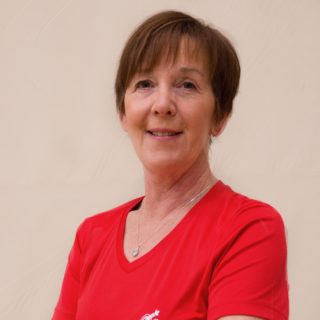
Gwen Smoluk – President
Gwen has a history of leadership, with Racquetball Canada serving as the President since 2016. Prior to that she was the chair of the Athlete Development Committee from 2012 to 2016. Gwen’s intimate knowledge of the sport as a parent of former athletes, a player and volunteer who has served in many capacities has benefitted our sport. Throughout her volunteer tenure, Gwen has enjoyed working with the team to make Racquetball stronger in Canada and is proud of the work the organization has done to enhance programs.

Cher Allen – Director
Cher started volunteering at the very young age of 12 and has been giving back to through her commitment and dedication since then. She has been a member of the Racquetball Manitoba Board for many years and was elected to the Racquetball Canada Board in 2020 as a member at large. In 2022, Cher was elected to the position of Vice President. Cher brings an important perspective as an athlete, coach and parent of an aspiring player and as a successful business owner.

Alyson Renaldo – Director
Alyson is the newest member of our board of directors. She is an avid racquetball player and dedicated to growing the sport in her hometown of Toronto and the nation at large. Alyson serves as one of the coaches for the junior level Learn-To-Play program at her local club and competes in provincial tournaments. Beyond the courts, Alyson is a professor of critical thinking and professional writing.

Brigitte Richard – Director
Biography coming soon.

Kyle Wiseman – Director
Biography coming soon

Ken Storozuk – Director of Finance
Ken brings an important perspective to our Board of Directors, gained through his years of involvement with the sport. Through his experience at the club level, Ken can speak to the needs of facility owners, sport leaders, tournament hosts and participants. As the board’s Director of Finance, Ken plays an important role in ensuring board oversight of the organization’s finances and the well-being of the organization.

Christine Keay – Athlete Representative
Racquetball has been part of Christine’s live for over twenty-five years when she first began her career as a junior athlete. She is a long-time member of the National Team who has competed for Canada at the highest levels. This experience, combined with her years spent as the Athlete Director, enables her to bring an important voice and perspective to our Board, which she has been a member of since 2016. Christine also represents our athletes with AthletesCAN, the association of Canada’s national team athletes.
The Board’s role and thereby the role of each Director of the Board, is to govern Racquetball Canada by providing leadership and direction in pursuit of our vision and mission. The Board is elected by the membership of the organization and is accountable to the membership for competent stewardship that will ensure the long-term viability of Racquetball Canada. The Board is to adhere to our Code of Conduct and Ethics and Conflict of Interest policies for all Board meetings.
The following policies help guide the board in ensuring good governance: (click on each policy title to review the policy)

View the Board of Director Job Descriptions to find out more about the role of the Board Members.
The Board ensures:
Board Meetings and Attendance
The Board meets a minimum of four times per year, based on a calendar that is set annually. Usually, the Board meets the third Tuesday of every month.
The Board of Directors has the right to remove any Director for non-fulfillment of responsibilities, by a (75%) percent affirmative vote, prior to expiration of the term of office. In such an instance the Board of Directors may appoint a replacement to serve as a director for the balance of the three year term.
Preparation
Directors and Staff are required to submit an electronic report at least three days prior to a meeting. The report should outline progress as a Board Member and in any other area of responsibility.
Conduct & Procedure
The Agenda will be adhered to as strictly as possible. However, if implementation of programs or the conduct of business would be hindered because of protocol, then protocol will be waived. If any Board Member wishes to place an item on the Agenda, please inform the President or Executive Director prior to the meeting.
The first item of business shall be the Roll Call of the Board Members and determination of the presence of a quorum. The meeting shall be conducted in accordance with Robert’s Rules of Order. It is the duty of the President to enforce the Rules of Order and the Board Members to insist upon the enforcement of the Rules of Order.
Motions cannot be rescinded at a Board Meeting unless the entire Board is present or a Notice of Motion to rescind has been circulated prior to the meeting to all Board Members.
It is most important that you feel free to express your true opinions. It is also important to ask for an explanation if you don’t understand. Do not be shy or intimidated by more vocal Board Members or feel that you are asking silly questions. There is no one that knows or understands everything.
The most important factor is that the Board must work as a team. During discussion, argue your point as strongly as you wish, however, once the vote is taken, even if it does not agree with your opinion, you are expected to support the decision. It is not acceptable for any Member of the Board of Directors at any function to stand up and say, “I did not agree with that at the Board or Executive Meeting.”
Lines of Communication
Board Members will go through the President if there are issues or concerns. The President will communicate with the Executive Director if they deem it necessary. Racquetball Canada staff will go through the Executive Director if there are concerns or issues and the Executive Director will communicate with the President if necessary.
Racquetball Canada has two Standing Committees which advise the Board of issues of governance.
The Bylaws state the rules for governing and operating Racquetball Canada. These are voted upon by the Membership and there are policies and procedures that must be followed when making any amendments that are included in the Bylaws.
We worked alongside the Sport Law & Strategy Group to develop updated, comprehensive, user-friendly policies and procedures. We encourage our provincial associations and affiliated clubs to adopt the policies for their own use. As a member of the Board of one of our committees, it is important to have an understanding all our policies, but in particular those policies that relate to governance.
Governance Policies include the following. Click on the policy name to read the corresponding policy.
Strategic Plan
We work to engage its membership in the strategic planning process. Our strategic plan was developed through a process of consultation with the membership at annual planning meetings and through discussion with our partners and our stakeholders including our members, coaches, officials, athletes and volunteers.
Operational Plan
Our Operational Plan consists of critical benchmarks and tactics that will help us achieve our strategic goals.
Planning Cycle
Strategic planning is done on a quadrennial basis and our plan is reviewed annually. The Operational Plan is updated each year based on new strategies, as well as Board and Stakeholder directives and feedback.

The Annual General Meeting is held annually in September. The meeting is open to representatives from the Provincial/Territorial Associations, which have been accepted into Racquetball Canada’s membership, the Board of Directors, the Auditor and those who have been invited to attend by the Board of Directors.
The Annual Meeting is a business meeting where the Board presents the Audited Financial Statements, the budget, votes on any bylaw changes and elect members to the Board. Following the Annual Meeting, we usually invite the Provincial Representatives to stay for an update and exchange of information.
The Call for Nominations is usually made in August, with nominations being due 30 days in advance of the Annual Meeting. Specific information about the Board positions open and any nominations requirements with be included with the Call for Nominations.